It's been far too long.


Tracklist:
01 Mimouna
02 Moulay Ahmed
03 Makawiya
04 Soudan
Get it HERE.


"Another time Jeff had been on a 2 day drunk.He had charmed this chicken
into sitting on his shoulder.By Sunday morning the chicken had been sitting
there for 8 hours or so --The gang goes to the End of the Trail for Sunday
Brunch-- The restaurant is packed with the after church crowd from Carson--
-Vida comes to the table and sez--"Jeff,,, you cant have that chicken in
here!!"--So Jeff takes the chicken off his shoulder,sticks it's head in his
mouth and bites it off.The headless chicken goes flyin',floppin'and flappin'
thru the restaurant,squirtin' blood all over the sunday suits and dresses.Vida
was NOT happy.Jeff was kicked out for a few days. He had to sincerely
apologize."


| Side 1: Medley | ||||
| Yene Me Nka | ||||
| Mewu A Na Mobesu Me | ||||
| Abusua Ne Wo Ara | ||||
| Papa Ma Me Bi Nni | ||||
| Obra Ye Bona | ||||
Side 2: Medley | ||||
| Mfa Nhye Obi | ||||
| Kasekenken | ||||
| Wo Begyaa Me | ||||
| Odo Bra | ||||

 I was excited to find this in a fleamarket recently, mainly because I've been loving the Covay song that appears on this recent post. I initially thought that it must be a compilation of tracks from throughout his career, but then was intrigued to find that its actually a reissue of his 1970 album "Different Strokes for Different Folks". Check out the man in his finery on the original cover:
 This is a great blend of deep soul, funk and blues sounds and its been keeping me entertained. Here's the excellent closing track:
| 01 | Sweet Thang | |||
| 02 | Daddy Please Don't Go Tonight | |||
| 03 | Why Did You Put Your Shoes Under My Bed | |||
| 04 | Stop By | |||
| 05 | Bad Luck | |||
| 06 | Hitching A Ride | |||
| 07 | Standing In The Grits Line | |||
| 08 | In The Sweet Bye And Bye | |||
| 09 | Ain't Nothing A Young Girl Can Do | |||
| 10 | If There's A Will There's A Way | |||
| 11 | What's In The Headlines |
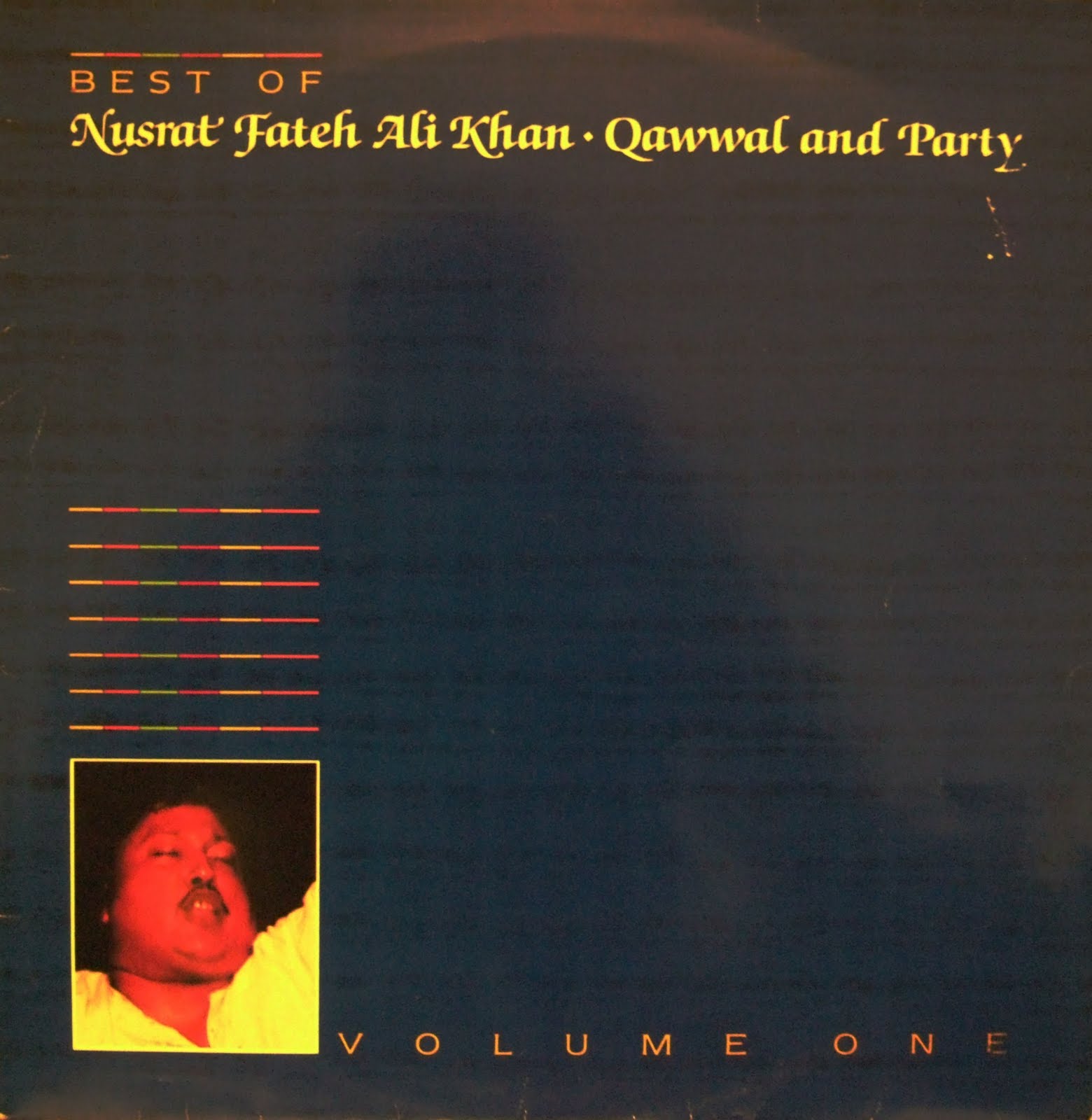

Strong voices and explosive hand-clapping characterize
the devotional music known as qawwali. An
ensemble of usually 12 male performers conveys a
religious message through music and song based on
mystic poetry by Sufi masters. The texts usually deal
with divine love (’ishq), the sorrow of separation
(hijr, firaq) and the union (visal), these concepts being
symbolically reinforced and illustrated by the
music. Qawwali blends Iranian and Central Asian
poetic, philosophical and musical elements into a
North Indian base, combining popular music with
classical traditions. Following the same pattern of
combination and blending, the texts cover Arabic
and Persian, but the main text body is usually in a
simple idiom form of Indian languages: Urdu,
Hindi, Purbi and Punjabi. Qawwali is derived from
the Arabic word qaul, literally meaning “saying” but
has taken on the meaning of “belief ” or “credo” in
South Asian languages. Qawwali is spiritual in essence;
it is the devotional music of the Sufis to attain
trance and mystical experience—originating in the
10th century and blossoming into its present form
from the 13th century onwards.
Qawwali is inseparable from the name of a Persian
court musician, composer, poet and mystic of that
period: Amir Khusrau (1254-1325). Amir Khusrau
experimented with musical forms, combining the
Indian and the Persian, the Hindu Bhakti and the
Muslim Sufi to produce the present form of
qawwali.
Qawwali thus became a popular expression of
Muslim devotion open to all faiths throughout
Northern India. This form of music rapidly became
a vehicle for the Islamic missionary movement in
India, while at the same time reinforcing the faith of
the Muslims. In many cases, the original Persian
mystical text is followed by a translation in the local
idiom sung in the same manner as the original.
While the orthodoxy continues to reject what they
perceive as a blasphemous mixture of music and religion,
qawwali remains an expanding form of music
enjoying universal popularity in South Asia and
beyond. An even more energetic form of qawwali
developed around the 16th century in the middle
Indus at the crossroads between Iran, Central Asia
and India. This form, called the Punjabi ang, presents
the crystal-clear and profound texts of Punjabi
Sufi poetry and folk songs woven into attractive
melodies and powerful rhythms. The late Nusrat Fateh
Ali Khan belongs to this branch of qawwali.

 Absolutely top notch collection of rare mid-'70s funk, soul and disco. The record contains some sweet northern soul like this one from Brother's Guiding Light:
| A1 | Act One - | Tom The Peeper | ||
| A2 | Brothers Guiding Light - | Getting Together | ||
| A3 | Al Downing - | I'll Be Holding You | ||
| A4 | Joe Tex - | Cat Got Her Tongue | ||
| A5 | King Floyd - | Can You Dig It? | ||
| A6 | Aaron Neville - | Hercules | ||
| A7 | Cissy Houston - | Midnite Train To Georgia | ||
| A8 | Annette Snell - | You Oughta Be Here With Me | ||
| B1 | Whispers - | A Mother For My Children | ||
| B2 | Roy C - | Got To Get Enough (Of Your Sweet Stuff) | ||
| B3 | Etta James - | Out On The Streets Again | ||
| B4 | Joneses - | Hey Babe (Is The Gettin' Still Good) | ||
| B5 | Don Covay - | It's Better To Have (And Don't Need) | ||
| B6 | Ohio Players - | Streakin' Cheek To Cheek | ||
| B7 | Dramatics - | Choosing Up On You | ||
| B8 | Little Anthony & Imperials - | La La La At The End |